
CBAM is no longer just a reporting exercise. On January 1, 2026, the definitive phase begins, and imports of iron and steel, aluminum, cement, and fertilizers carry a real price tag.
Where things stand today
CBAM currently covers iron and steel, aluminum, cement, and fertilizers. From 2026, importers must:
- declare the actual embedded emissions in imported goods*,
- ensure that emissions data is verified by an accredited third party,
- purchase and surrender CBAM certificates corresponding to the emissions**.
*If accredited actual emissions data is not available, the most recent default values must be used.
**Starting February 2027.
What changes when CBAM becomes financially binding?
The transition to the definitive phase introduces several important changes, such as:
- From reporting to payment obligation
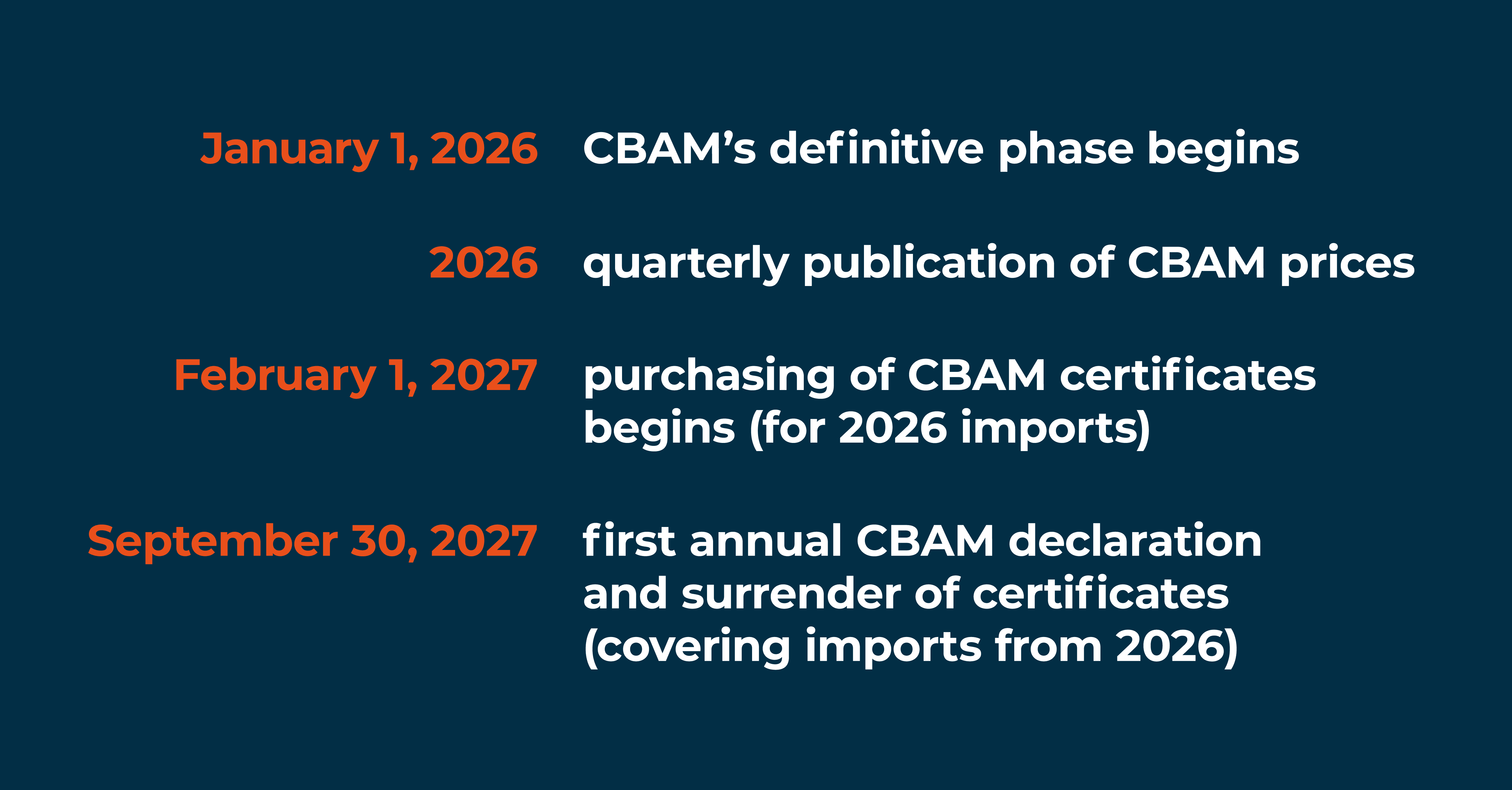
Imports as of January 1, 2026 give rise to an actual CBAM cost. However, certificates will only be purchased in connection with the annual declaration. CBAM certificates can be purchased starting in February 2027 and are reported in an annual declaration covering calendar year 2026, which must be submitted no later than September 30, 2027.
The annual report will automatically be able to draw on customs statistics from the member states’ customs authorities. The report is populated with information on quantity, weight, and standardized emission values, which can later be amended if actual values become available. - Actual emissions become the norm — default values are penalized
Where verified actual emissions cannot be demonstrated, the EU’s default values must be used. These are deliberately conservative and can result in significantly higher costs. In 2026, a markup of approximately 10% is also applied to default values, which strengthens the economic incentive to use verified data. From 2027, the markup will rise to 20%, increasing to 30% from 2028 onward. - CBAM benchmarks introduced
CBAM benchmarks are reference levels (based on the most efficient production installations within the EU ETS) that are deducted from reported emissions, thereby reducing the number of certificates required. Benchmarks differ by product and production method, meaning there is no single CBAM benchmark for all goods, but rather different benchmark values depending on the product imported and how it was produced.
Accreditation and verification of actual emissions
From 2026, third-party verification is mandatory in order for actual emissions to be used in the CBAM declaration. Swedac is the national accreditation body in Sweden; details here.
In the near term: ensure that your third-country suppliers register in the third-country portal and that they begin measurement and data collection for 2026 emissions now.
Instructions for how operators are to register can be found on the European Commission’s page under the Module for non-EU installation operators (O3CI).
CBAM price: what we know about 2026 and 2027
The CBAM certificate price is directly linked to the price of emission allowances within the EU ETS:
- 2026: prices are published quarterly, based on average ETS auction results. Prices published in 2026 apply to goods imported during the respective quarter. The first price for Q1 2026 was published in April 2026 and was set at €75.36 per metric ton of CO₂.
- From 2027: prices will be published weekly, strengthening the link to the daily market.
Even though certificate purchases for 2026 imports do not take place until 2027, the publication of prices already makes it possible to build forecasts and cost assessments.
How 2050 Consulting can help:
- Calculate and analyze your CBAM cost for 2026 using the new default values and the published price.
- Provide ongoing advisory services on legal requirements and changes by monitoring the regulatory framework and translating it into concrete actions.
Key dates to keep in mind:
Consultant at 2050
Partner and Senior Consultant at 2050
This article is part of 2050 Highlights, a series where we explore pressing sustainability and business topics. Want to learn more about how your company can navigate the evolving regulatory landscape? Contact us at 2050!