
Dafgårds
Taking the Lead on Sustainable Supply Chains


As the EU tightens its requirements, Dafgårds chooses to get ahead. Through a new approach to traceability and risk management, they are strengthening both their business and their value chain relationships.
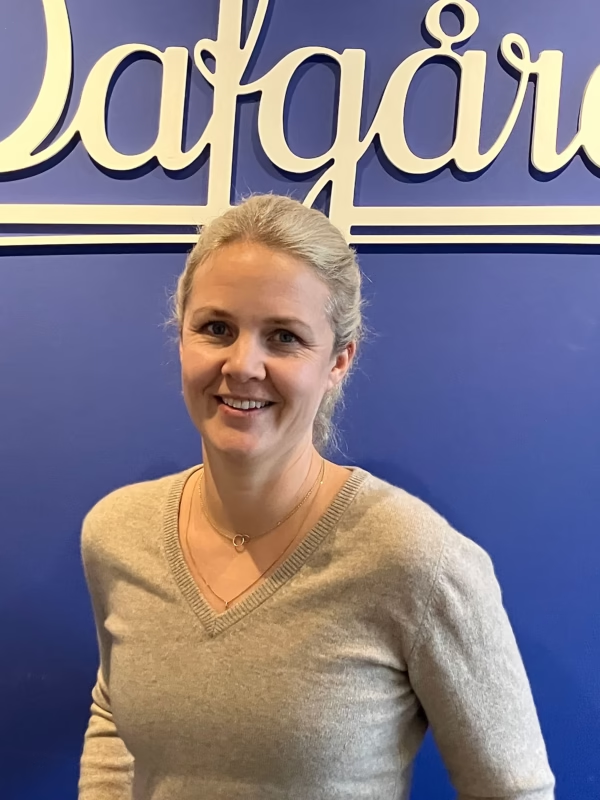
”We wanted to gain better insight into the origin of our raw materials, understand risks in the supplier chain, and build a more robust decision-making framework. Being perceived as a credible partner in the value chain is becoming increasingly business-critical.”
Anna Örnefeldt, Sustainability Specialist, Dafgårds
Challenge: Limited Visibility and Increasing Requirements
With raw materials sourced from around the world, Dafgårds needed a better understanding of early production stages. At the same time, pressure from CSRD and upcoming due diligence requirements was mounting. What was at stake was business-critical competitiveness. Dafgårds needed to:
- identify risks in the supplier chain
- strengthen credibility in customer dialogues
- create a future-proof decision-making framework
Solution: A Comprehensive Mapping and Structured Risk Model
Dafgårds took a bold, holistic approach to its value chains. By combining external risk data with internal knowledge, a clear and scalable risk picture was created. The work was built on three components:
- Mapping of the entire value chain — from raw material extraction to finished product.
- Screening against international risk filters — and analysis of certifications, audits, and supplier dialogues.
- A shared risk assessment tool — evaluating risk based on severity, scope, and likelihood.
Result: Sharper Decisions and a Stronger Business
With the new approach, Dafgårds is better equipped for future sustainability requirements and has strengthened both its internal processes and its market position. This has led to:
- earlier and more accurate risk identification
- faster and more proactive decision-making
- increased transparency in the supplier chain
- stronger customer dialogues based on better data
- clearer accountability and more efficient internal processes